
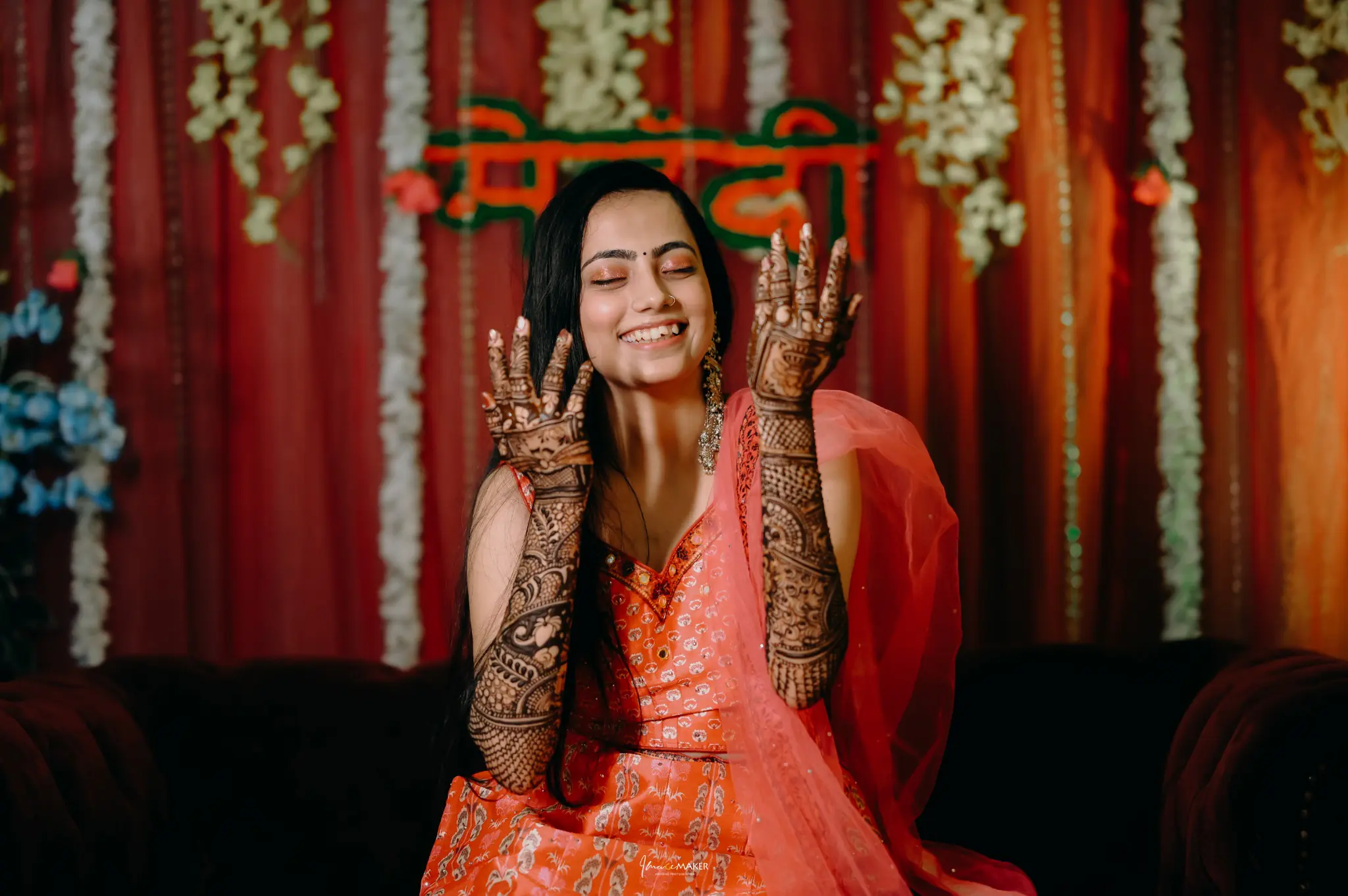
Mehndi photography is about more than showing the finished design. It can capture the artist at work, the bride’s expressions, the people gathered around her and the atmosphere of an unhurried celebration. With a little coordination, you can make space for these photographs without interrupting the application or asking anyone to pose when they are uncomfortable.
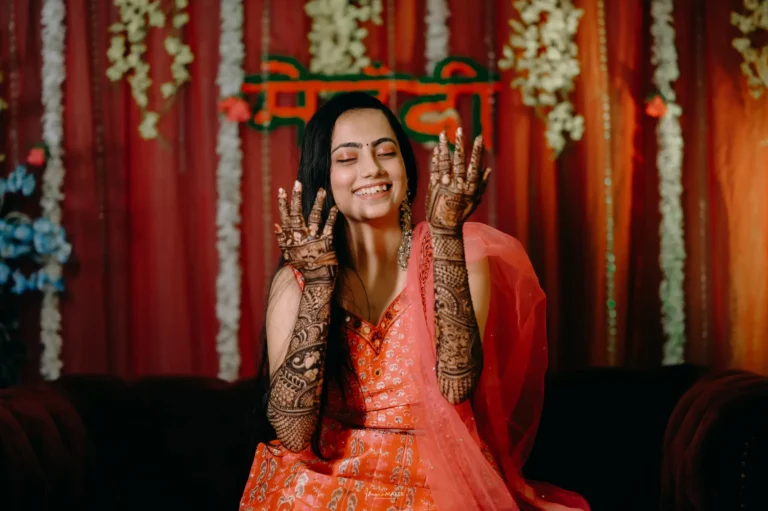
1. Coordinate mehndi photography with the artist
Ask the artist when a short photo break would fit the application. Some moments need concentration, and moving the hands for a picture may interrupt the work. Share the photographer’s arrival time and let both professionals agree a practical sequence around the actual appointment.
Photographs of the design in progress can be part of the story. The hands being prepared, an outline taking shape and a quiet expression can all add context. You do not need to wait until every detail is finished to begin documenting the event.
Once the application is complete, follow the artist’s aftercare guidance. The photographer can work around comfortable hand positions rather than asking you to press, fold or hold objects just to match a reference image. Your mehndi photography plan should support the experience rather than complicate it.
2. Choose a comfortable seat and a simple background
Make sure the person receiving the mehndi can sit comfortably for the appointment. Consider back support, access to water and how people will move around the area. A chair chosen only for photographs may become tiring when the application takes time.
A clean nearby background helps close-ups stand out, but it does not have to be elaborate. The photographer can often use clothing, a suitable wall or a small clear area. Keep bags, wrappers and spare materials in one place without removing anything the artist needs to work.
Check whether the seating area has usable light at the planned time. If it does not, tell the photographer early so another arrangement can be considered. Avoid moving the whole setup repeatedly during application just to chase different backgrounds.
3. Photograph the design at different distances
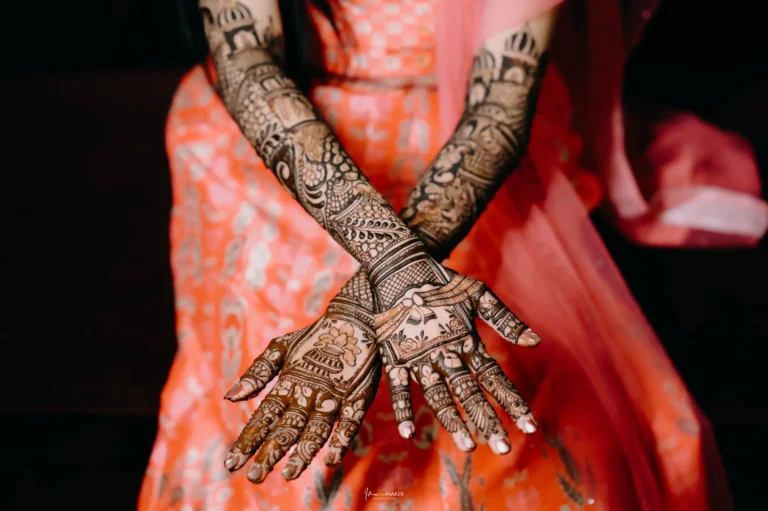
A close detail records the pattern, while a wider photograph shows how it looks with the outfit and jewellery. Include both if they matter to you. Tell the photographer about meaningful symbols, initials or a design connected to your story so they are not overlooked.
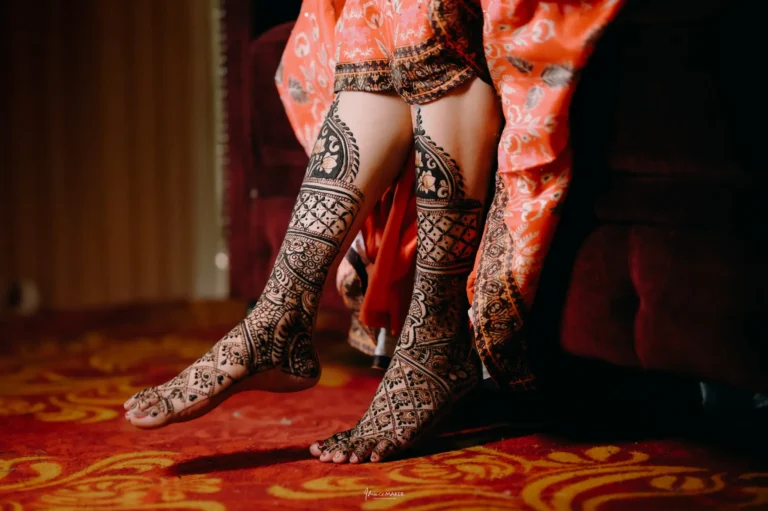
For mehndi photography, hands should rest in positions that feel natural and respect the artist’s instructions. A simple portrait with the hands visible can be more comfortable than a complicated arrangement. If foot designs are part of the plan, discuss access and privacy before the session.
Keep the selection varied: the finished design, a small section with personal meaning and a wider portrait may tell the story better than many almost identical close-ups. Variation also makes it easier to choose images for an album later.
4. Include faces and relationships
The people sharing the time with you help make the event memorable. A parent sitting nearby, a sibling offering support or friends talking between songs can give the photographs warmth. Tell the team which relationships are especially important.
Let conversation continue while the photographer works. Constantly asking everyone to face the camera can interrupt the relaxed feeling of the gathering. Combine a few planned portraits with candid photographs of what people are already doing.
If there are games, music or a family performance, share that information. Mehndi photography benefits from knowing where attention will move next. A short heads-up from the host can help the team capture the response as well as the activity itself.
5. Plan outfits and accessories around the appointment
Wear something that works for both comfort and the photographs you want. Think about sleeves, fastenings and the practicalities of changing later. Try the outfit beforehand so you know whether it allows the artist access and whether you can sit comfortably.
Keep important jewellery and accessories organised, but avoid adding things that make application awkward. Discuss whether detailed bridal portraits will happen at the mehndi event or during wedding preparation. Separating the two can remove pressure to finish every kind of photograph at once.
Make your mehndi photography priorities clear if time is limited. For example, you may prefer finished-design portraits and family interactions over a separate fashion-style session. The photographer can use that preference when the schedule changes.
6. Connect the details to a complete wedding story
Look at how an entire gallery moves between people, details and the main events. Our Chitvan and Lovish wedding gallery includes mehndi details alongside bridal portraits and family moments. It can help you explain the balance you would like in your own collection.
If several events are being covered, ask how the images will be delivered and organised. Separate folders or a clear selection process can make finding your mehndi photographs easier later. Confirm any album or film inclusions in the written quote.
For the studio location and customer feedback, see Image Maker’s Google Business Profile, wedding photography in Gorakhpur. Use the profile alongside the wedding portfolio and a conversation about your own event.
7. Keep the day’s plan flexible
Share the artist’s start time, photographer’s arrival, any performances and the next event’s timing in one message. Include a coordinator’s phone number so you are not answering every question while your hands are occupied.
Leave time for breaks and do not set a rigid portrait deadline before you know when the design will be ready. If the application runs longer, the photographer can focus on family interaction and return to details later within the agreed coverage.
The strongest mehndi photography plan makes room for both the process and the celebration. Decide what matters, give the team the information they need and let the gathering unfold. The finished photographs should remind you how it felt to be there.
Frequently asked questions
When should we photograph the finished design?
Coordinate with the artist and follow their aftercare guidance. The photographer can plan a comfortable detail session when the design is ready rather than interrupting application.
Can friends and family be included?
Yes. Mention essential people beforehand and combine a few group portraits with candid interaction. Keep the artist’s working area accessible.
Is a separate decor setup necessary?
No. A simple background and thoughtful light can be enough. Choose decor because it suits your celebration, not because a photograph requires a particular prop.
For mehndi photography in Gorakhpur, tell Image Maker about your event schedule or call +91 78449 56488. Share whether you need one ceremony or coverage across several wedding events.