
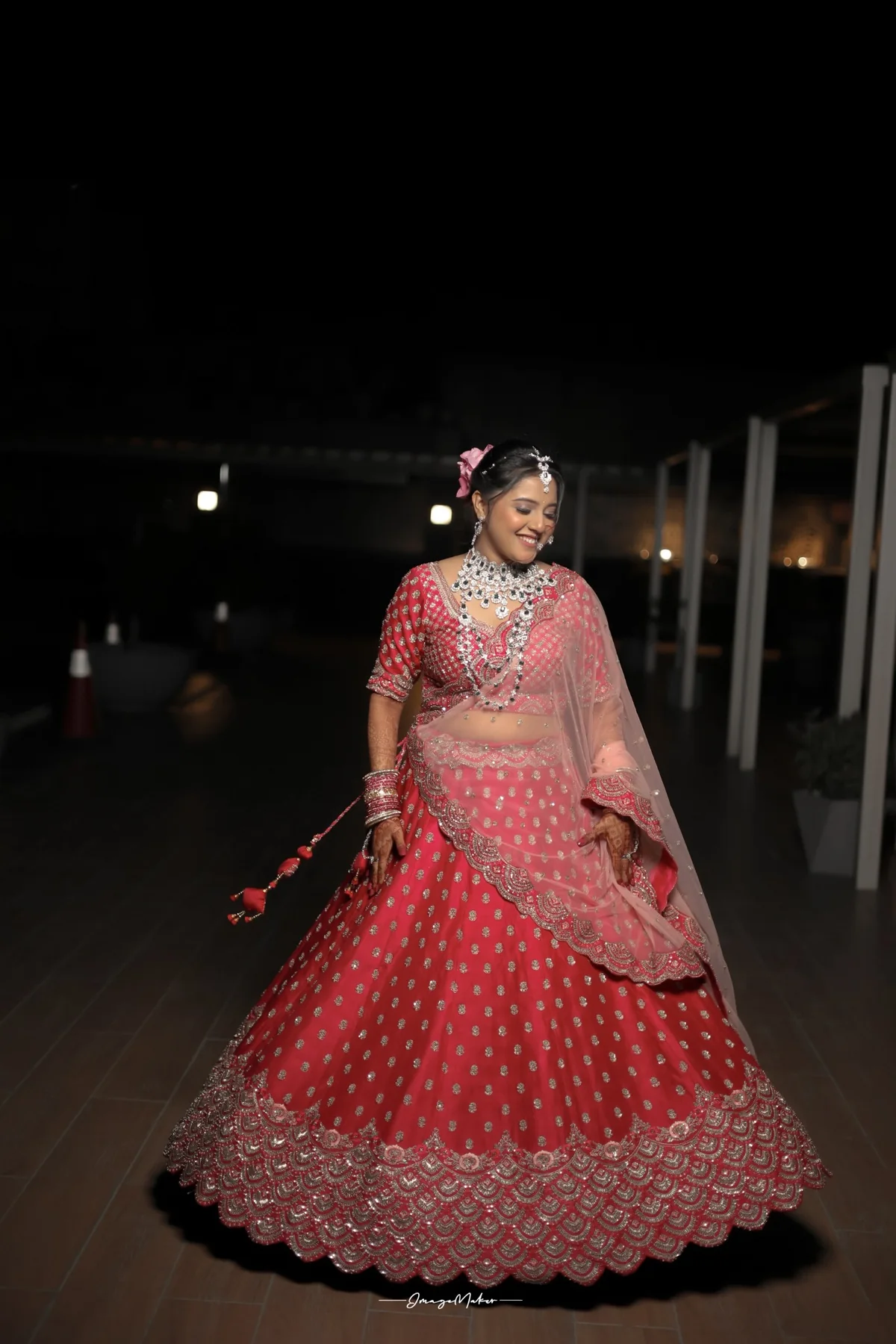
Indoor wedding venues can look warm and elegant, but their lighting changes from one corner to another. A bright entrance, a dim ceremony stage and colored reception lights all call for different decisions. A little planning with your photographer helps keep important moments clear while preserving the atmosphere of the room.
Walk through the venue before the event
If possible, arrange a short walkthrough at the same time of day as the ceremony. Notice windows, pillars, mirrors, low ceilings and the direction guests will face. Ask where the couple will stand, where family members will sit and whether the venue will change its lighting during rituals. A floor plan or a few phone photos can help the photography team prepare.
When a walkthrough is not possible, share the venue name, room photos and event schedule in advance. Include details such as a stage backdrop, a moving baraat, a small prayer area or a separate room for family portraits. The more accurately the team understands the space, the less time it needs to solve logistics on the wedding day.
Balance natural and artificial light
Window light can create soft portraits, especially before sunset, but it may not reach every part of a room. Ask whether there is a suitable place near a window for a few portraits and whether that spot will remain available. For the ceremony, the team may need discreet camera lighting or a different angle to make faces visible without disrupting guests.
Colored LED lights and stage effects can change skin tones in photographs. Tell the venue and DJ that you want a few moments with neutral, steady light for key rituals and family portraits. That does not mean turning the celebration into a studio setup: the aim is to preserve the room’s mood while making expressions and details easy to see.
Plan ceremony positions and family portraits
Ask your photographer where they will stand during the main rituals and whether the camera position will block guests or the officiant. A second angle can be useful in a crowded hall, but the crew should coordinate with the venue and follow any restrictions. For group photographs, select a clear, well-lit area before the event and let family members know where to gather.
Keep a short portrait list with names and relationships rather than trying to remember every combination during the celebration. Assign one relative from each family to help gather people. This saves time and keeps older guests from waiting in a crowded or dim area.
Questions to ask your photography team
- Have you photographed in this venue or a similar indoor space?
- How do you handle low light without losing natural expressions?
- Can you share a full indoor wedding gallery, not only selected highlights?
- Which areas and timings are best for portraits and family groups?
- Are there venue rules about flash, movement or equipment?
Share your priorities early, especially if a particular ritual, elder or family portrait matters most. You can review Image Maker’s wedding photography services and contact the studio with your venue details. For business information and directions, visit Image Maker on Google Maps.
A thoughtful indoor photography plan comes from clear communication, knowledge of the room and respect for the ceremony. Confirm the schedule and restrictions in advance so the team can focus on genuine moments when the day begins.